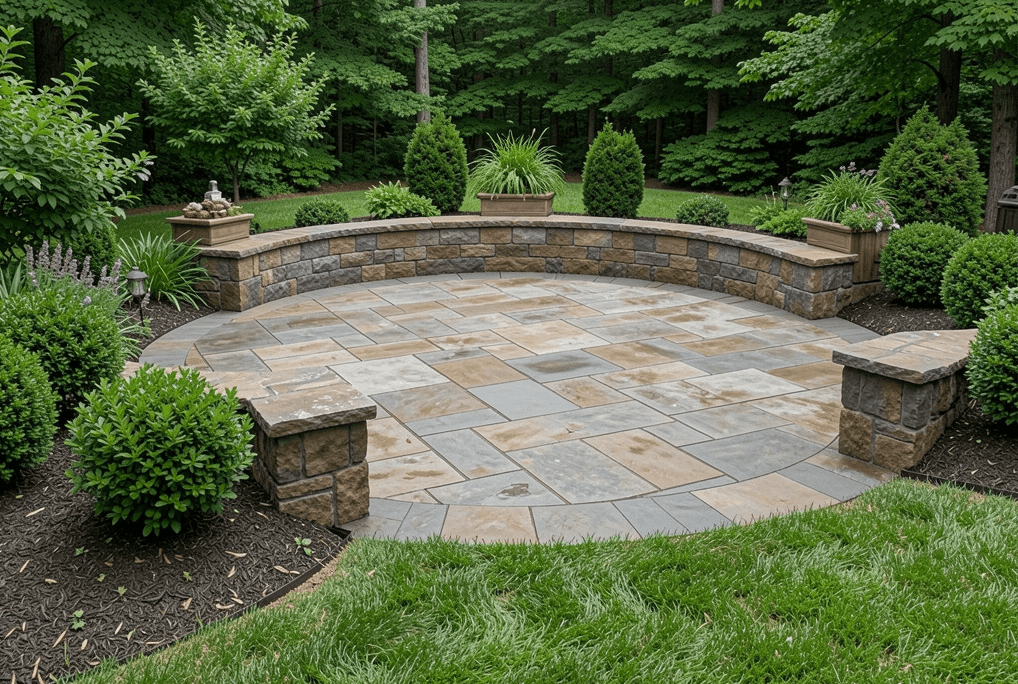
Patio installation cost in Tennessee typically ranges from $3,000 to $15,000, depending on size, material, and site complexity. A small basic patio can come in under $3,000, while a large patio with premium materials and add-ons like a fire pit or lighting can push well past $15,000.
Understanding the patio installation cost in Tennessee can make it much easier to plan a project that fits your budget without surprises. This guide breaks down pricing by material, the factors that move your quote, real project examples by size, and practical ways to save. If you’re still deciding between materials, our companion guide, Concrete vs Pavers: Which Patio Material Is Best for East Tennessee? goes deeper on that specific decision.
Cost by Material
Factor |
Concrete |
Pavers |
|---|---|---|
| Durability | 20–30 years, prone to cracking | 25–50 years, very durable |
| Repairability | Difficult, full slab or panel replacement | Easy, swap individual pavers |
| Aesthetics | Clean, seamless, limited styles | Wide range of colors, patterns, textures |
| Slipperiness when wet | Can be slick, especially when sealed | Textured surface, better grip |
| Frost heave resistance | Moderate, rigid slab cracks under pressure | Strong, flexible joints absorb movement |
| Installation time | Faster (1–3 days average) | Slower (3–7 days, more prep-intensive) |
Concrete is the most budget-friendly option and installs the fastest, making it a solid choice for homeowners who want a clean, simple patio without a large investment. Pavers cost more upfront but offer better durability, drainage, and easier repairs since individual units can be replaced instead of the whole surface. Brick delivers a classic, timeless look with similar durability to pavers, though at a comparable or slightly higher price point. Natural stone sits at the top of the range because of the labor involved in cutting and fitting irregular pieces, but it offers a premium, one-of-a-kind appearance. Stamped concrete bridges the gap, it keeps the lower material cost of poured concrete while mimicking the look of stone, brick, or pavers through patterned, textured stamping.
Cost Factors
Size. This is the most straightforward driver, cost scales roughly linearly with square footage, though larger projects sometimes see a slightly lower per-square-foot rate due to efficiencies in labor and material ordering.
Material. Your material choice alone can shift the total cost by 2–3x for the same square footage, so it’s often the biggest lever you have for controlling your budget.
Grading and site prep. Sloped yards, poor drainage, or soil that needs to be excavated and replaced all add labor time before the patio surface itself is even installed. Flat, easily accessible sites are the cheapest to work with.
Drainage. Proper grading and, in some cases, a French drain or gravel base are necessary to keep water from pooling on or under the patio. Skipping adequate drainage is a common cause of cracking and settling down the road, so it’s worth budgeting for even though it adds to the upfront cost.
Add-ons. Features like a built-in fire pit, outdoor lighting, seating walls, or a pergola all add to the total project cost but also significantly increase the functionality and enjoyment of the space. Many homeowners phase these in over time rather than including everything in the initial build, see our guide on How Much to Install an Outdoor Fire Pit in 2026? if a fire feature is on your list.
Average Project Examples
Small patio (200 sq ft): A basic concrete patio of this size typically runs $1,200–$2,400, while a paver version runs $2,000–$4,000. This size works well for a small seating area or grill station.
Medium patio (400 sq ft): A concrete patio at this size costs roughly $2,400–$4,800, while pavers land around $4,000–$8,000. This is a common size for a dining and lounge combination area.
Large patio (600+ sq ft): Concrete typically runs $3,600–$7,200+ at this size, while pavers or natural stone can range from $6,000–$18,000+ depending on material and add-ons like a fire pit or outdoor kitchen space.
These figures are baseline material and installation estimates, site conditions, drainage needs, and any added features will move the final number up or down.
Ways to Save Money
Phase the project. You don’t have to build everything at once. Installing the core patio surface now and adding a fire pit, lighting, or seating wall in a future phase spreads out the cost without compromising the final result.
Choose durable but affordable materials. Stamped concrete, for example, gives you a premium look at a fraction of the cost of natural stone, while standard concrete pavers offer most of the durability benefits of premium pavers at a lower price point. For help weighing these tradeoffs, see
How to Choose the Right Material for Your Patio or Walkway.
Combine with other work. If you’re already having excavation, grading, or drainage work done for another project, a retaining wall, a driveway, or landscaping, bundling your patio into that same mobilization can reduce overall labor costs.
FAQs
Most patios in Tennessee cost between $3,000 and $15,000 installed, depending on size, material, and site complexity. A small basic concrete patio can come in under $3,000, while a large paver or natural stone patio with add-ons can exceed $15,000.
Basic broom-finish concrete is generally the cheapest option, running $6–$12 per square foot installed, compared to $10–$30+ per square foot for pavers, brick, or natural stone.
Yes, though not dramatically. Larger patios sometimes see a slightly lower per-square-foot rate due to efficiencies in labor and material ordering, but overall cost still increases significantly with total square footage.
Permit requirements vary by city and county, and depend on factors like patio size, height, and whether it’s attached to the home. Check with your local building department, or ask your contractor to confirm before work begins.
Phasing the project (adding features like a fire pit later), choosing a more affordable but still durable material like stamped concrete, and bundling the work with other planned excavation or landscaping projects are the most effective ways to reduce cost.
Ready to get a quote for your project? Explore our patio & hardscaping services → Or go straight to scheduling: Request your free quote.