A well-designed fire pit does more than add warmth. It anchors your entire outdoor layout. The best backyard fire pit landscaping ideas combine structure, safety, and smart material choices so the space feels intentional—not added as an afterthought.
In Tennessee, soil drainage, humidity, and seasonal frost shifts affect how you design landscaping around a fire pit. A strong gravel base, proper slope, and fire-resistant hardscape materials matter just as much as aesthetics. Below, you’ll find ten practical, build-ready fire pit landscaping ideas that work in real backyards—whether you prefer modern, rustic, or budget-conscious designs.
1. Sunken Fire Pit with Retaining Wall Seating
A sunken layout creates a natural gathering zone and protects the flame from wind. This type of backyard fire pit landscaping idea works especially well on sloped Tennessee yards because you can cut into the grade and use the soil strategically.
Build the fire pit slightly below patio level and surround it with a curved seating wall. Use block or natural stone for durability. Install a compacted gravel base beneath the pit to improve drainage and prevent settling. If your yard has elevation change, a custom retaining wall installation in Tennessee stabilizes the space and prevents erosion around the fire feature.
Keep at least a safe clearance from nearby structures and avoid overhanging branches.
2. Modern Concrete Patio with Gas Fire Feature
A clean-lined patio creates a strong foundation for modern fire pit landscaping ideas. A square or rectangular gas fire pit pairs well with poured concrete or large-format pavers. This layout suits homeowners who prefer low maintenance and controlled flames.
Start with a reinforced concrete slab or professionally laid pavers. Ensure the patio slopes slightly away from the house to prevent water pooling. A gas line should be installed according to local code and inspected properly. Integrating the fire feature into professional patio installation services ensures the base, drainage, and spacing meet safety standards.
Use minimalist seating and subtle landscape lighting to complete the look.
3. Rustic Natural Stone Fire Pit
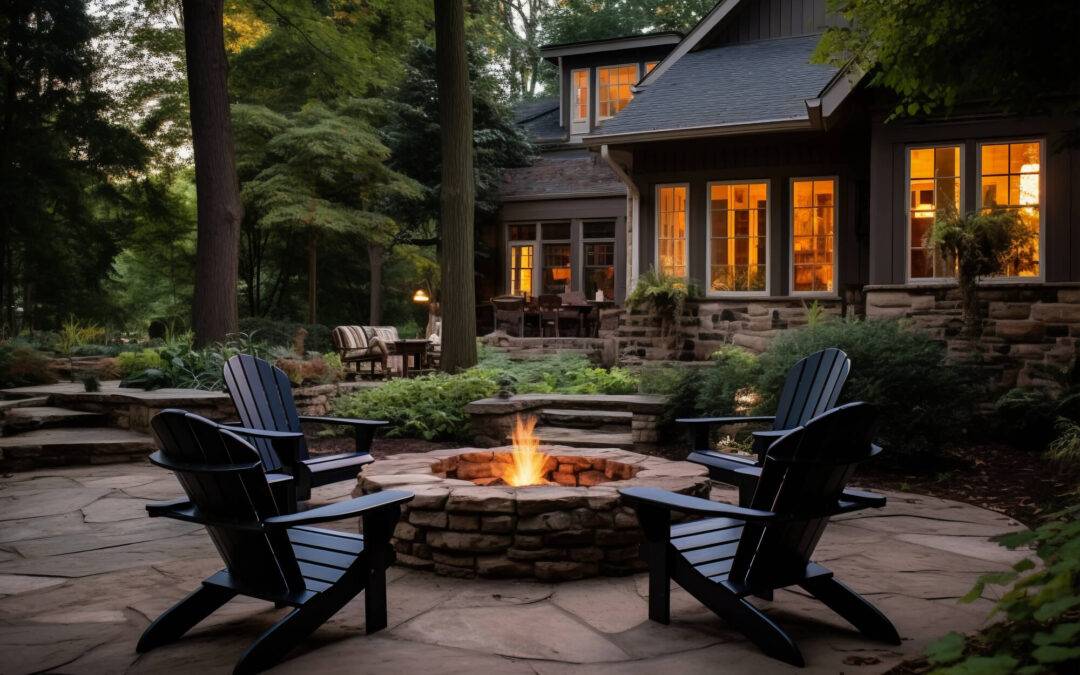
A rustic setup remains one of the most requested backyard fire pit landscaping ideas because it blends naturally with trees, native plants, and informal patios. Use stacked fieldstone or irregular flagstone to create texture and visual warmth.
Install the pit on a compacted gravel base topped with stone dust for stability. Surround it with crushed granite or natural mulch alternatives that resist embers. When you incorporate natural stone hardscaping solutions, the fire pit feels integrated rather than placed on top of the landscape.
Keep combustible materials away from the burn zone and avoid using river rock inside the pit, as trapped moisture can cause cracking under high heat.
4. Small Backyard Fire Pit with Smart Layout Planning
You don’t need a large yard to execute effective backyard fire pit landscaping ideas. In compact spaces, placement matters more than size. A circular fire pit with built-in seating keeps the layout efficient and walkable.
Position the pit at least a safe distance from fencing and structures. Use compact pavers or decomposed granite to define the gathering zone without overwhelming the yard. In tight areas, thoughtful spacing through custom landscape design planning prevents overcrowding and improves traffic flow.
Keep plantings low-profile and choose fire-resistant shrubs around the perimeter to maintain visibility and safety.
5. Fire Pit with Built-In Seating Wall
Built-in seating turns a simple fire feature into a defined outdoor room. This approach works well for homeowners searching for practical yet inviting fire pit landscaping ideas that maximize seating without cluttering the yard with furniture.
Construct a curved seating wall from block or natural stone to mirror the shape of the pit. Anchor it on a compacted gravel and concrete footing to prevent shifting during freeze-thaw cycles. When integrated into complete outdoor living space design, the fire pit becomes part of a cohesive patio, dining, or entertainment area rather than a standalone feature.
Use fire-resistant cushions and maintain proper clearance between the wall and flame edge.
6. Gravel Base Fire Pit Area for Better Drainage
A properly prepared base protects your investment. Many homeowners overlook this step, but stable fire pit landscaping ideas start below ground level. A compacted gravel base improves drainage, reduces shifting, and prevents water from pooling under the fire bowl.
Excavate several inches below grade, install landscape fabric, and compact layered crushed stone before adding pavers or a metal ring. In Tennessee’s clay-heavy soil, slope the surrounding surface slightly away from the pit. If water runoff remains an issue, professional yard drainage and grading solutions can correct pooling and protect nearby structures.
Avoid placing a fire pit directly on bare soil. It leads to uneven settling.
7. Pergola-Covered Fire Pit Gathering Area
A pergola adds vertical structure and makes your backyard fire pit landscaping ideas feel intentional. It defines the space visually and provides light shade without fully enclosing the flame.
Install the pergola outside the ember zone and use fire-resistant wood or metal framing. Anchor posts into concrete footings to prevent movement during storms. When part of a broader custom backyard structure installation, the pergola integrates seamlessly with patios, seating walls, and pathways.
Avoid installing fabric canopies directly above wood-burning pits. Keep overhead clearance open and well ventilated.
8. Fire Pit with Integrated Landscape Lighting
Lighting transforms nighttime usability. Smart illumination enhances both safety and ambiance in practical fire pit landscaping ideas. Low-voltage LED path lights, recessed step lights, and soft uplighting around seating walls create depth without overpowering the flame.
Install fixtures away from direct heat exposure and use weather-rated wiring. Subtle lighting along walkways reduces trip hazards after dark. When coordinated through professional landscape lighting design, the fire pit area becomes usable year-round and visually balanced with the rest of the yard.
Avoid overly bright floodlights. Warm tones preserve the natural glow of the fire.
9. Budget-Friendly DIY-Style Fire Pit Zone
Not every project requires a full renovation. Some backyard fire pit landscaping ideas focus on smart material selection and simple layout changes. A prefabricated metal ring set into a gravel circle can create a clean, low-cost gathering space.
Use compacted crushed stone to define the perimeter and add inexpensive Adirondack chairs for seating. Keep the area clear of mulch and overhanging branches. Even budget layouts benefit from thoughtful grading, which is why many homeowners eventually upgrade through affordable backyard landscaping services to improve longevity and drainage.
Choose durable materials first. Decorative upgrades can come later.
10. Fire Pit Integrated into a Full Backyard Renovation
The most impactful backyard fire pit landscaping ideas place the fire feature within a complete outdoor redesign. Instead of treating it as a single element, integrate the pit with patios, retaining walls, drainage upgrades, and planting beds for a cohesive layout.
Start with a site evaluation to assess grading, soil stability, and utility access. Incorporate hardscape materials that match existing structures and maintain safe clearance zones. When planned as part of complete backyard transformation services, the fire pit becomes a long-term investment rather than a temporary upgrade.
Coordinated design improves function, safety, and property value.
How to Landscape Around a Fire Pit Safely
Safe landscaping around a fire pit starts with spacing and base preparation. Place the fire feature on a compacted gravel base to improve drainage and prevent shifting. Keep clear distance from structures, fencing, and overhanging trees according to local fire codes.
Slope surrounding hardscape slightly away from the pit to prevent water pooling. Avoid mulch or dry leaves near the burn zone. Choose fire-resistant materials such as stone, concrete pavers, or decomposed granite. In Tennessee’s humid climate, proper drainage prevents moisture buildup that weakens the base over time.
If your yard has clay-heavy soil or slope, professional grading ensures stability.
Best Materials for Fire Pit Landscaping
The best materials for fire pit landscaping resist heat, manage drainage, and maintain structural stability over time. Natural stone, concrete pavers, brick, and decomposed granite perform well when installed correctly.
- Natural stone: Durable and heat resistant, ideal for rustic designs.
- Concrete pavers: Uniform, modern appearance with strong load capacity.
- Brick: Classic look but requires proper mortar for longevity.
- Decomposed granite: Budget-friendly and drains well when compacted.
- Crushed gravel: Essential as a base layer beneath any fire pit.
Avoid river rock inside the burn area, as trapped moisture can cause cracking under high heat. Always compact base layers thoroughly before placing surface materials.
Frequently Asked Questions
1. What is the best landscaping around a fire pit?
The best landscaping around a fire pit uses fire-resistant materials like stone, concrete pavers, or decomposed granite installed over a compacted gravel base. Maintain proper spacing from structures and avoid mulch near the burn zone. Good drainage and stable grading protect the installation long term.
2. What should you put under a backyard fire pit?
You should install a compacted crushed gravel base beneath a backyard fire pit to improve drainage and prevent settling. In clay-heavy soil, add landscape fabric below the gravel layer. Avoid placing a fire pit directly on bare soil or grass, as it leads to uneven shifting.
3. How far away from the house should a fire pit be?
A fire pit should be placed a safe distance from your home, fencing, and overhanging branches according to local building and fire codes. Always check county regulations before installation. Proper spacing reduces fire risk and protects siding, decks, and landscaping.
4. What materials are fire resistant for landscaping?
Fire-resistant landscaping materials include natural stone, brick, concrete pavers, decomposed granite, and crushed gravel. These materials withstand high temperatures and reduce ember spread. Avoid bark mulch or untreated wood near the fire pit area.
5. Can you build a fire pit in a small backyard?
Yes, you can build a fire pit in a small backyard by choosing a compact circular design and maintaining clear walking space. Use low-profile seating and non-combustible surfaces like pavers or gravel to maximize safety and usability.
6. Is gravel safe around a fire pit?
Gravel is safe around a fire pit when properly compacted and used as a base layer or surface perimeter. Crushed stone improves drainage and resists heat. Avoid decorative river rock inside the burn area due to moisture expansion risks.
7. Do I need drainage under a fire pit?
Yes, proper drainage under a fire pit prevents water pooling and structural settling. Install a compacted gravel base and slope surrounding surfaces slightly away from the pit. Drainage becomes especially important in humid climates like Tennessee.
8. What is the cheapest way to landscape a fire pit area?
The cheapest way to landscape a fire pit area is to use a prefabricated metal ring, compacted gravel, and simple seating. Focus on proper grading first. Decorative upgrades can be added later without compromising safety or stability.
Final Thoughts on Backyard Fire Pit Landscaping Ideas
The most effective backyard fire pit landscaping ideas combine thoughtful design, proper grading, fire-resistant materials, and safe placement. Whether you choose a rustic stone feature, a modern patio layout, or a budget-friendly gravel base design, long-term performance depends on correct installation and drainage planning.
In Tennessee, humidity, clay soil, and seasonal freeze-thaw cycles make structural preparation essential. A well-built fire pit should feel integrated into your landscape—not added on top of it.
At Appalachian, we design and build fire features that align with real yard conditions, safety standards, and long-term durability. If you’re planning to upgrade your outdoor space, start with a layout that balances beauty, function, and compliance.