The difference between hardscaping and landscaping is simple. Landscaping covers the living elements of your yard, such as plants, grass, and trees. Hardscaping covers the non-living, structural elements, such as patios, walls, and walkways. Most beautiful outdoor spaces combine both.
What Is Landscaping?
Landscaping focuses on the living parts of your property. It shapes how your yard looks, feels, and grows through the seasons. Because plants change over time, landscaping needs ongoing care. Common landscaping work includes:
- Lawn care, including mowing, seeding, and fertilizing
- Planting trees, shrubs, flowers, and garden beds
- Mulching to hold moisture and control weeds
- Landscape design and planning
- Irrigation systems that water your plants
In East Tennessee, plant choice matters. Hot summers, cold snaps, and clay soil favor hardy, well-adapted plants. The University of Tennessee Extension offers helpful guidance on plants and lawns that thrive in our region. Overall, landscaping brings color, shade, and softness to your yard. It also improves curb appeal, cools your property in summer, and helps control erosion when plants hold the soil in place.
What Is Hardscaping?
Hardscaping covers the non-living, built features of your outdoor space. These elements add structure, create usable areas, and last for many years with little upkeep. Common hardscaping features include:
- Patios and outdoor living areas
- Retaining walls that hold back soil on slopes
- Fire pits and fireplaces
- Walkways and steps
- Outdoor kitchens
- Fences and gates
Hardscaping solves practical problems. A retaining wall manages a slope. A walkway gives safe footing. A patio creates room for chairs and a table. Because hardscape sits on the ground for decades, it needs a solid base and good drainage, especially on Tennessee’s rocky, hilly lots.
How Hardscaping and Landscaping Work Together
The best outdoor spaces use both. Hardscape provides the structure and usability. Landscape adds the softness and beauty. Think of hardscaping as the bones of your yard and landscaping as the finishing touches that bring it to life.
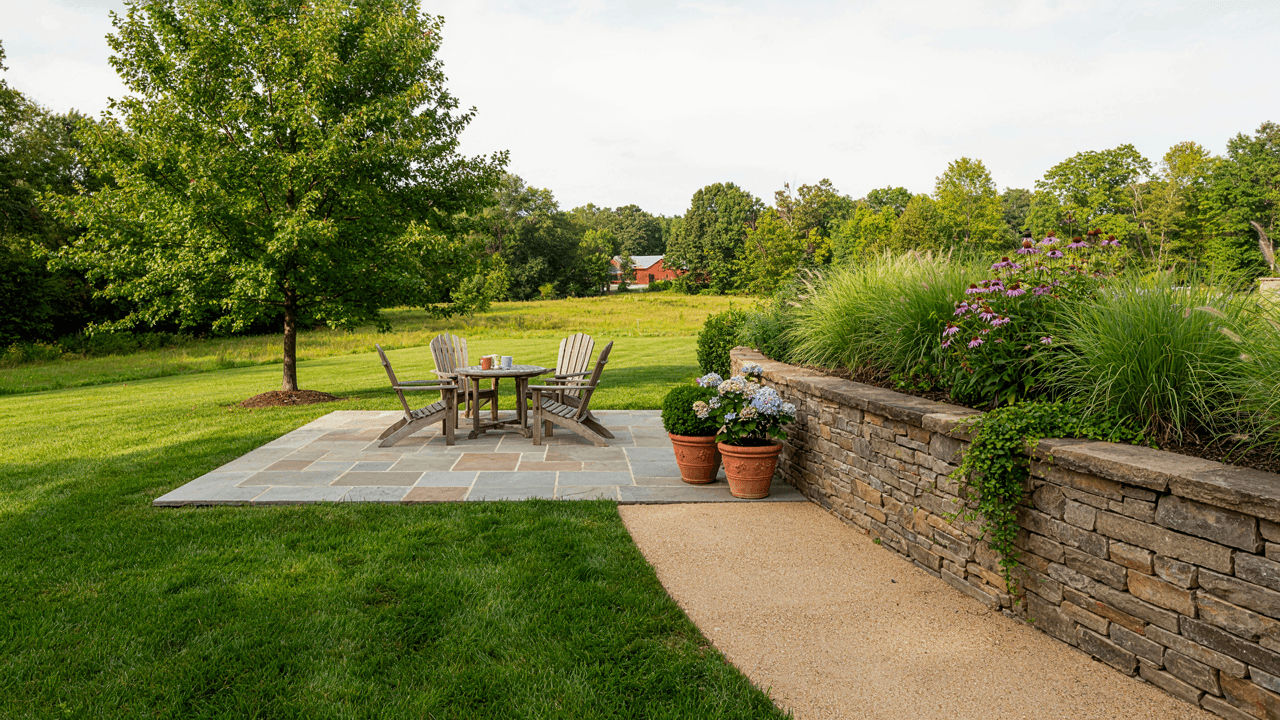
For example, a stone patio gives you a place to gather. Shrubs and flowers around its edge soften the hard lines and add color. Likewise, a retaining wall holds a slope in place, while ground cover above it keeps the soil stable and the wall looking natural. A walkway guides guests to your door, and planting beds along it add curb appeal.
When the two work together, your yard feels balanced. Too much hardscape can feel cold and harsh. Too much landscaping with no structure can feel messy and hard to use.
The Difference Between Hardscaping and Landscaping at a Glance
Not sure which one you need? This table matches common goals to the right service.
You want… | You need… |
|---|---|
| A place to host dinners outside | Hardscaping (a patio or outdoor kitchen) |
| A thick, green lawn | Landscaping (lawn care and irrigation) |
| To stop a slope from washing away | Hardscaping (a retaining wall) |
| Color and seasonal blooms | Landscaping (planting beds and flowers) |
| A cozy spot for cool evenings | Hardscaping (a fire pit) |
| A safe path from the driveway to your door | Hardscaping (a walkway or steps) |
| Shade and privacy | Landscaping (trees and shrubs) |
| A softer look around a new patior | Both (hardscape plus plantings) |
Which Should You Start With: Hardscaping or Landscaping?
In most projects, start with hardscaping, then landscape around it. Hardscape work involves digging, heavy equipment, and grading. If you plant first, that work can damage new plants.
Hardscape also sets the layout, so you know where beds, trees, and lawn should go. Once the structures are in place, planting is easier and looks more natural.
There are exceptions. Large trees may need early planting because they take years to grow, and drainage or grading problems should be fixed before anything else. A professional can help you plan the right order.
Plan Your Outdoor Space With Appalachianscapes
Whether you need a patio, a retaining wall, a new lawn, or a full redesign, we can help you get the balance right. Explore our hardscaping services and our landscaping services, then contact us to start your project.
FAQs
A patio is hardscaping. It is a built, non-living feature. The plants, flowers, and shrubs around it are landscaping.
Hardscaping usually costs more per square foot because it needs more labor, materials, and equipment. However, it also lasts longer. Landscaping projects, such as planting and sod, often cost less up front but may need regular upkeep. Costs vary widely by project, so request a quote for your specific yard.
Not always, but most yards benefit from both. Hardscape makes the space usable, and landscape makes it beautiful. Together, they also add more value to your home. Many homeowners in East Tennessee plan both at once so the finished space feels designed rather than pieced together over time.
Softscaping is another word for the living parts of landscaping, such as plants, grass, and trees. It is the opposite of hardscaping.
Ready to get a quote for your project? Explore our patio & hardscaping services → Or go straight to scheduling: Request your free quote.